A short, honest education, not a pitch. What follows is drawn from years of underwriting acquisitions on the buy side and from Alaska owners who have been through a sale. Most owners leave money on the table not because the business is weak, but because the story is unclear and the timing is late. Six patterns show up again and again.
1. Guessing at value
Your business is worth EBITDA times a multiple, and the buyer already knows yours. Owners anchor to what a neighbor sold for, what they need to retire, or a round number that feels right. Buyers anchor to comparable transactions and a discount for every risk you have not addressed. When the two anchors meet, the prepared side wins.
2. Books built for taxes, not buyers
Every legitimate deduction that minimizes your tax bill also minimizes your reported earnings, and buyers pay for provable earnings. The add-back conversation is where credibility is won or lost. Clean, well-documented financials with defensible adjustments are worth more than any single operational improvement you could make in the final year.
3. A business that runs through you
If the customer relationships, the pricing decisions, and the key vendor calls all route through the owner, the buyer is not buying a business. They are buying a job with keyperson risk attached. Owner-dependent cash flow quietly costs a full turn of multiple at the table, and fixing it takes longer than almost anything else on this list.
4. Treating it as only a business decision
A maximum-value exit sits where three plans meet: your personal plan, the business financial plan, and your personal financial plan. Owners who prepare the business but not themselves stall at the finish line, and deals that stall get repriced. The identity question, the family question, and the after-tax number all belong in the preparation, not the closing week.
5. Taking the first offer
The first buyer to call is the most aggressive one, not the best one. An unsolicited offer feels flattering and urgent, and both feelings work for the buyer. A real process with multiple interested parties typically moves the outcome 15 to 40 percent, which is more than most owners can add through operations in the same window.
6. Starting too late
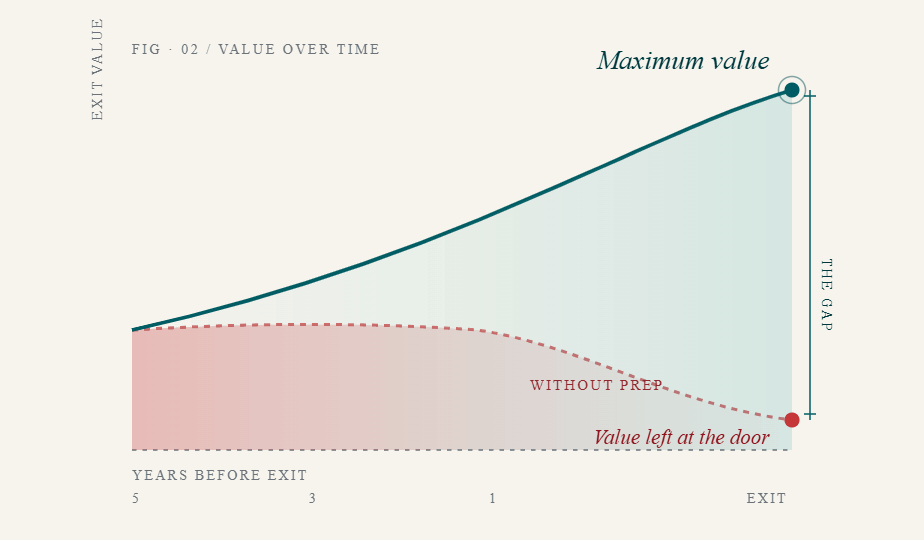
Most of this work takes 18 to 36 months. Runway is what lets you fix problems instead of disclosing them, run a process instead of reacting to one, and choose your moment instead of having it chosen for you. Every one of these mistakes is fixable, but not alone, and not at the last minute.
What to do with this
Start with the free 7-lesson course to get oriented, book a session with an advisor if you have a live situation, or talk to us about running the preparation with you. We are meant to be the step before you go to market.
Where to go from here
Start with the free 7-lesson course, or book a session with an advisor if you have a live situation.