How to Sell a Business in Hawaii

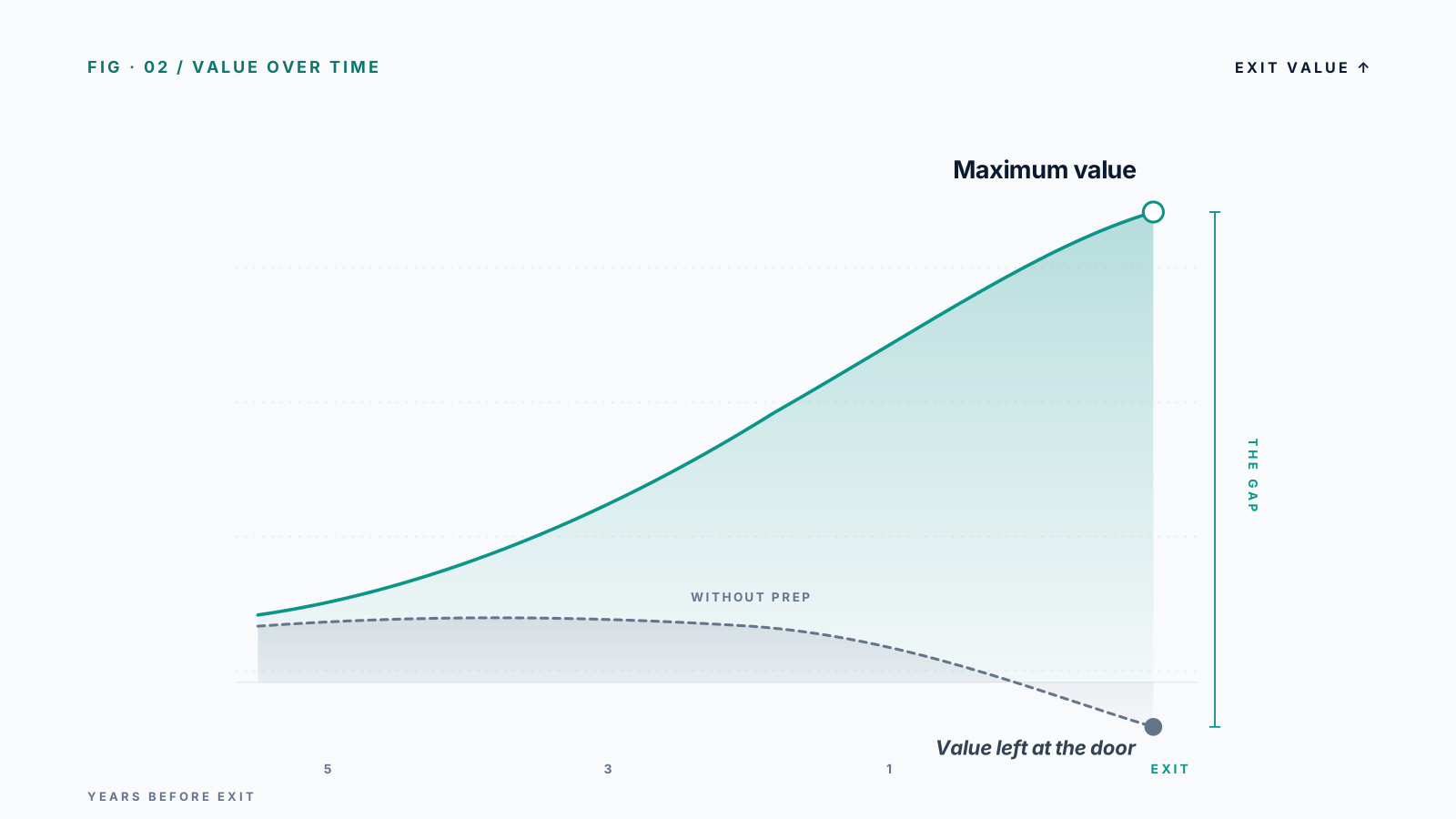
Hawaii's small business transaction market shares important characteristics with Alaska: geographic isolation, a small local buyer pool, strong seasonality, and a market where preparation and national buyer reach are more important than almost anywhere else. The state's tourism economy creates strong businesses across hospitality, retail, and services, but the exit requires planning well in advance given these structural realities.

120,000+
small businesses in Hawaii
SBA Office of Advocacy, 2024
51%
of HI business owners are 55 or older
U.S. Census Bureau
$500K–$5M
typical transaction range for HI lower middle market
BizBuySell HI data
14–20 mo.
average time to close a business sale in Hawaii
IBBA Western Region

Hawaii has one of the oldest small business owner populations in the country, with a significant proportion of businesses owned by families who built them during Hawaii's tourism boom decades. Succession planning is a genuine challenge in a state where the next generation often pursues opportunities on the mainland.

Get the free Hawaii seller checklist

A plain-language document checklist built for Hawaii business owners. Know exactly what to organize before any advisor conversation.

3 years of tax returns and financials
Key customer and vendor contracts
Corporate documents and licenses
Employee records and org chart

No spam. We will send the checklist and occasional resources for Hawaii sellers. Unsubscribe anytime.

Top industries for business sales in Hawaii

Tourism & HospitalityConstruction & Real EstateHealthcare ServicesAgriculture & FoodProfessional Services

Industry-specific guides for Hawaii sellers

Each industry has distinct valuation drivers, buyer pools, and deal structures. Select your industry for specific guidance.

Construction

Hawaii's construction sector is driven by tourism infrastructure investment, residential demand that chronically exceeds...

Read guide
Restaurant & Hospitality

Hawaii's tourism economy is the strongest per-capita in the country, and hospitality businesses here can command premium...

Read guide
Healthcare Practice

Hawaii's healthcare market is unique nationally: the state has a universal employer mandate (prepay HMO), a distinct pat...

Read guide
Professional Services

Hawaii's professional services market is smaller than mainland markets but benefits from a captive client base, high bar...

Read guide

City-specific guides for Hawaii

Buyer pools, transaction activity, and market conditions vary significantly by city. Find your market below.

Honolulu

Honolulu is Hawaii's commercial hub and home to the deepest buyer pool in the state.

35,000+ businesses
View city guide
Kailua-Kona

Kailua-Kona anchors the Big Island's west coast and serves as the gateway for tourism, coffee agriculture, and the growing technology and remote-worker economy.

4,500+ businesses
View city guide
Hilo

Hilo is the Big Island's commercial hub and serves the eastern side's agriculture, healthcare, and government sectors.

4,000+ businesses
View city guide
Kahului

Kahului is Maui's commercial center and the logistics hub for the island's tourism economy.

5,500+ businesses
View city guide
Pearl City

Pearl City is a major Oahu suburb near Pearl Harbor with a stable military-adjacent and residential economy.

3,500+ businesses
View city guide

Common questions from Hawaii business owners

How do I find buyers for my Hawaii business if the local pool is limited?

National marketing through a broker with Pacific Rim relationships is essential. Hawaii businesses attract buyers from California, the Pacific Northwest, Japan, and increasingly from the broader Asian market. The mistake most Hawaii sellers make is pricing based on local comparable sales, which reflect the limited local buyer pool, rather than pricing based on what a well-marketed national process can achieve. A prepared seller with clean financials who markets nationally consistently outperforms one who sells locally.

How does the cost of living in Hawaii affect my business valuation?

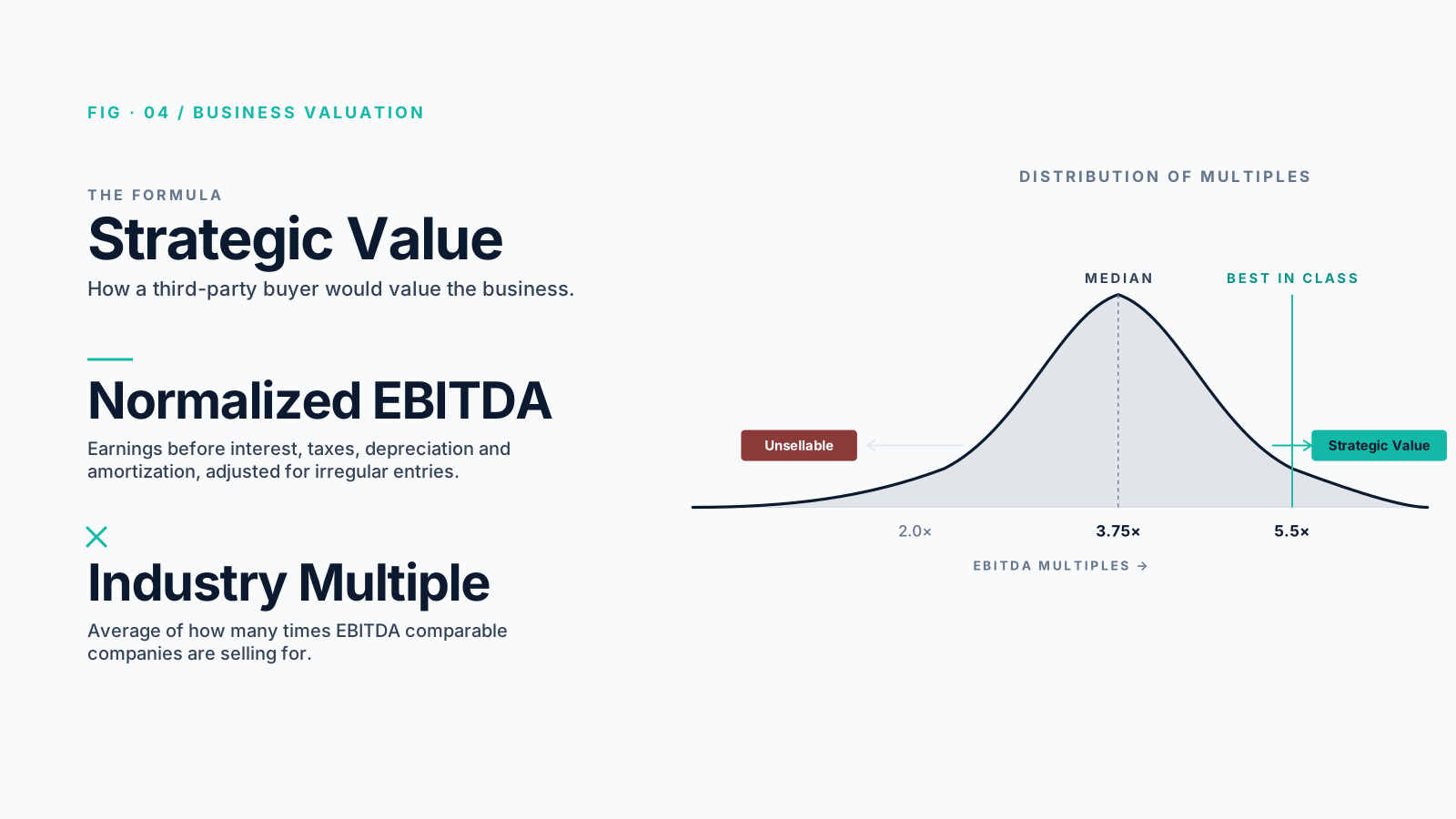
Hawaii's high cost of living affects your business value in both directions. Higher wages are a cost that buyers will scrutinize and normalize carefully. But high costs also create barriers to entry that protect your market position and reduce competitive pressure from new entrants. On balance, businesses with genuine market presence and stable customer relationships tend to hold their multiples well because buyers understand that the moat is real.

Free · no account required

Start with the free crash course

Seven lessons covering valuation, timing, brokers, due diligence, and deal terms. Built for owners with $500K to $25M in revenue. Takes about 30 minutes.